


How to split tips fairly: five methods that actually work
Five ways real teams divide tips — equal, by hours, by points, by sales and hybrid pools — with a worked example for each and honest notes on where each one breaks down.
Practical writing about splitting tips fairly — the methods teams actually use, the rules that apply in Germany and across Europe, and the habits that keep a shift handover short.

Excluding a trainee on Day 1 feels exploitative. Giving them an equal share feels unfair to the person who trained them. A graduated entry solves both — but only if it is written down before the first shift.
Tipza Free splits tips for up to three people and stores every result so you can look back. Tipza Pro lifts that cap and turns the same history into charts you can actually learn from.
Most tip disputes are not about greed. They are about information — someone cannot check a number, so they challenge it. A shift lead who can show the working ends the argument before it becomes personal.
Cornell researchers spent decades testing what makes guests tip more, so you do not have to run experiments on table twelve. Most of what works comes down to one thing: being a person, not an order-carrying process.
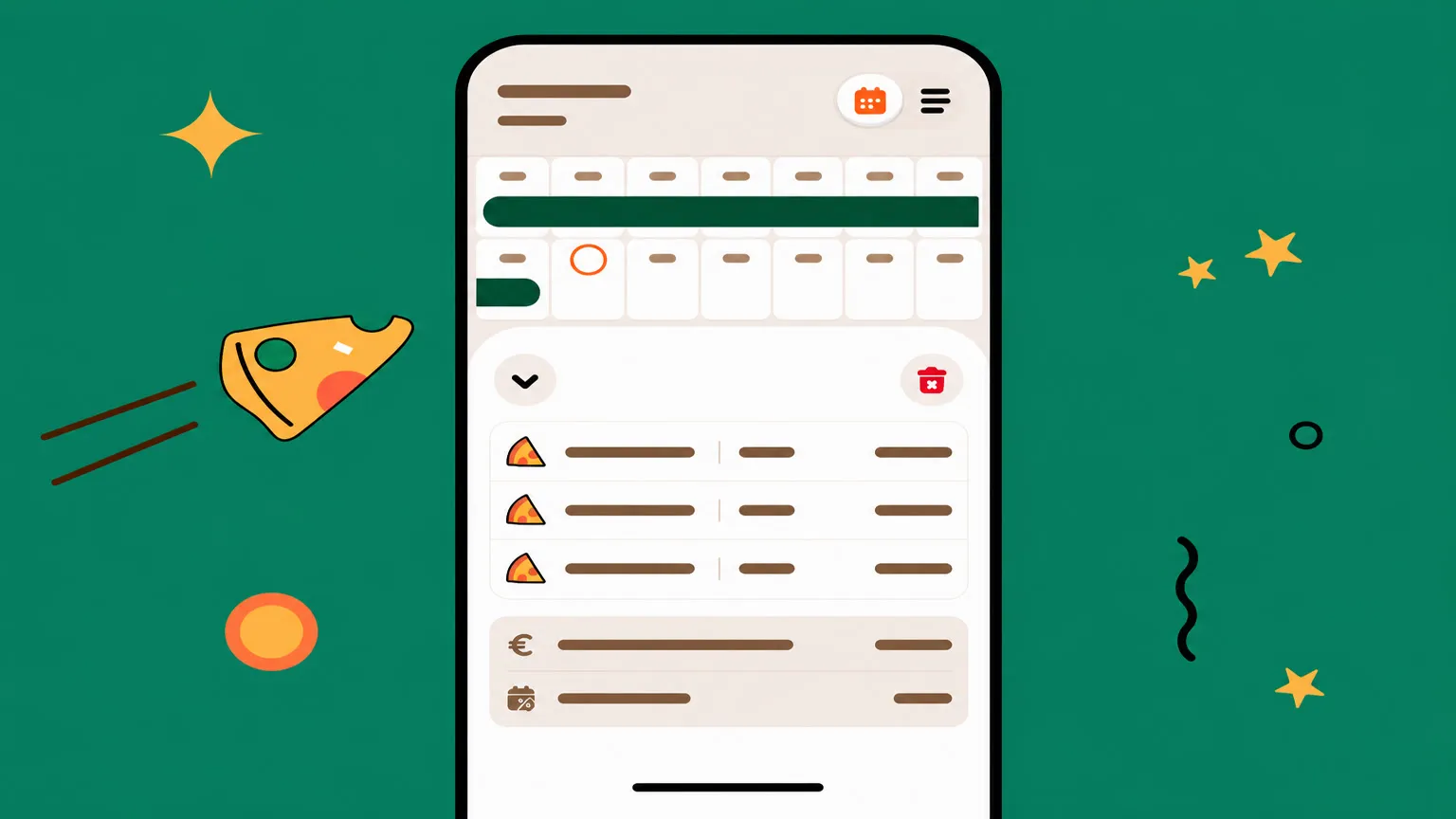
Tipza is built around one loop: the people, the total, the method, the breakdown. The first split is just that loop done once, slowly enough that the second one takes two minutes.
Tronc is a catering word for a tip pool that someone is accountable for. It is not a different kind of money. It is a pool with a name on the rule, which is often all a team was missing.
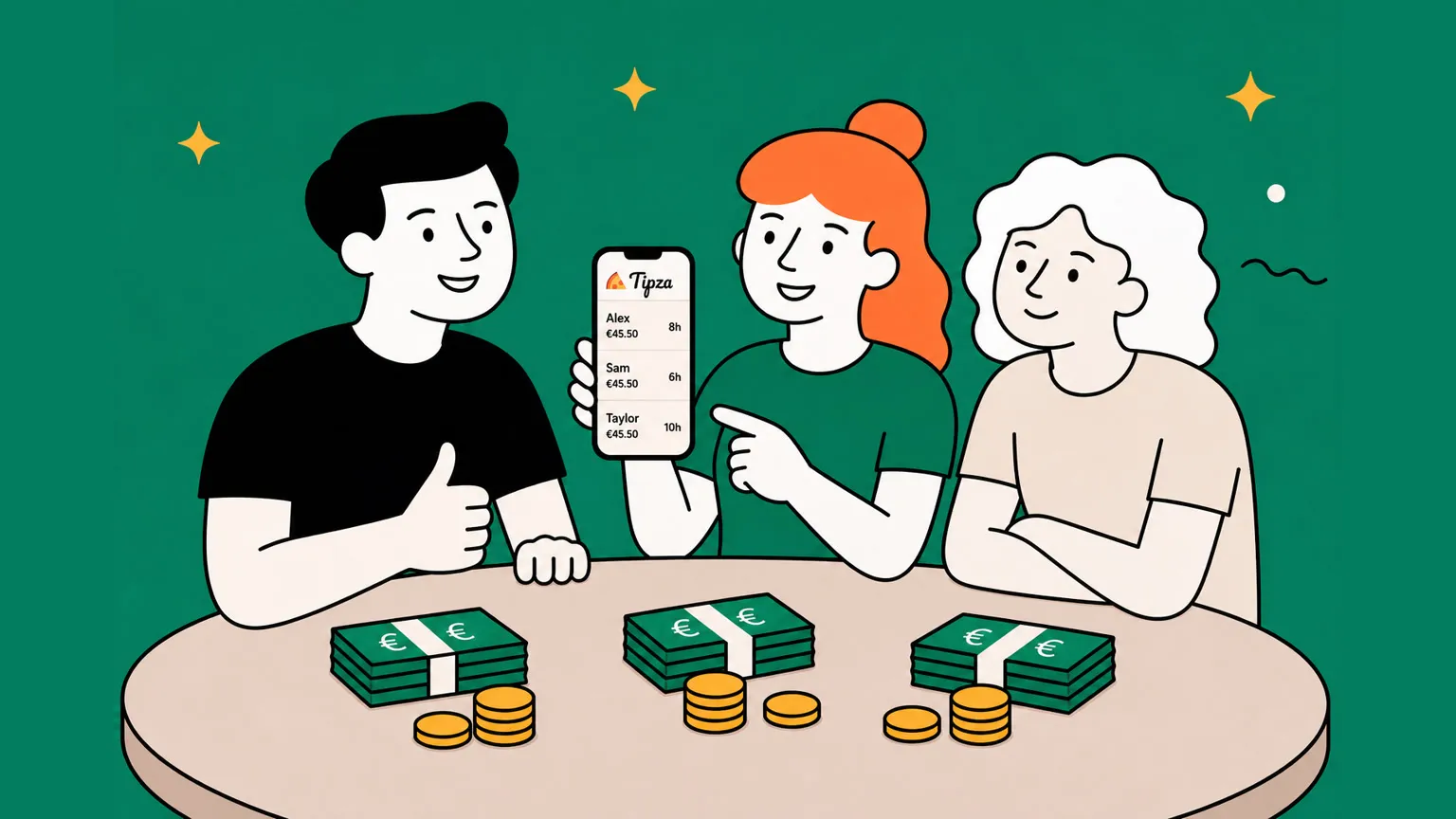
Most tip arguments start after the last guest has gone, when somebody is already in their coat. A five-minute closing routine — total, rule, working, payout — is cheaper than the conversation that replaces it.
Guests, staff and the till often treat a service charge and a tip as the same money. They are not. One is usually a price; the other is a gift. Mixing them up is how a payout turns into an argument.
When shifts are different lengths, an equal split is the argument waiting to happen. Splitting by hours is the default for a reason: the hours are already tracked, and the shares always add back up.

There is no European approach to tips. One country exempts them entirely, another taxes them at a flat 5%, a third leaves the tax alone and legislates who gets the money instead — and the rules moved in all six during the last four years.

A cash tip is settled before the guest reaches the door. A card tip travels through an acquirer, a bank account and a payroll run first — and every one of those steps is a decision somebody has to make.
A tip policy is not a legal document. It is one page that answers six questions, so that the next argument about a payout ends in ten seconds instead of a negotiation.